
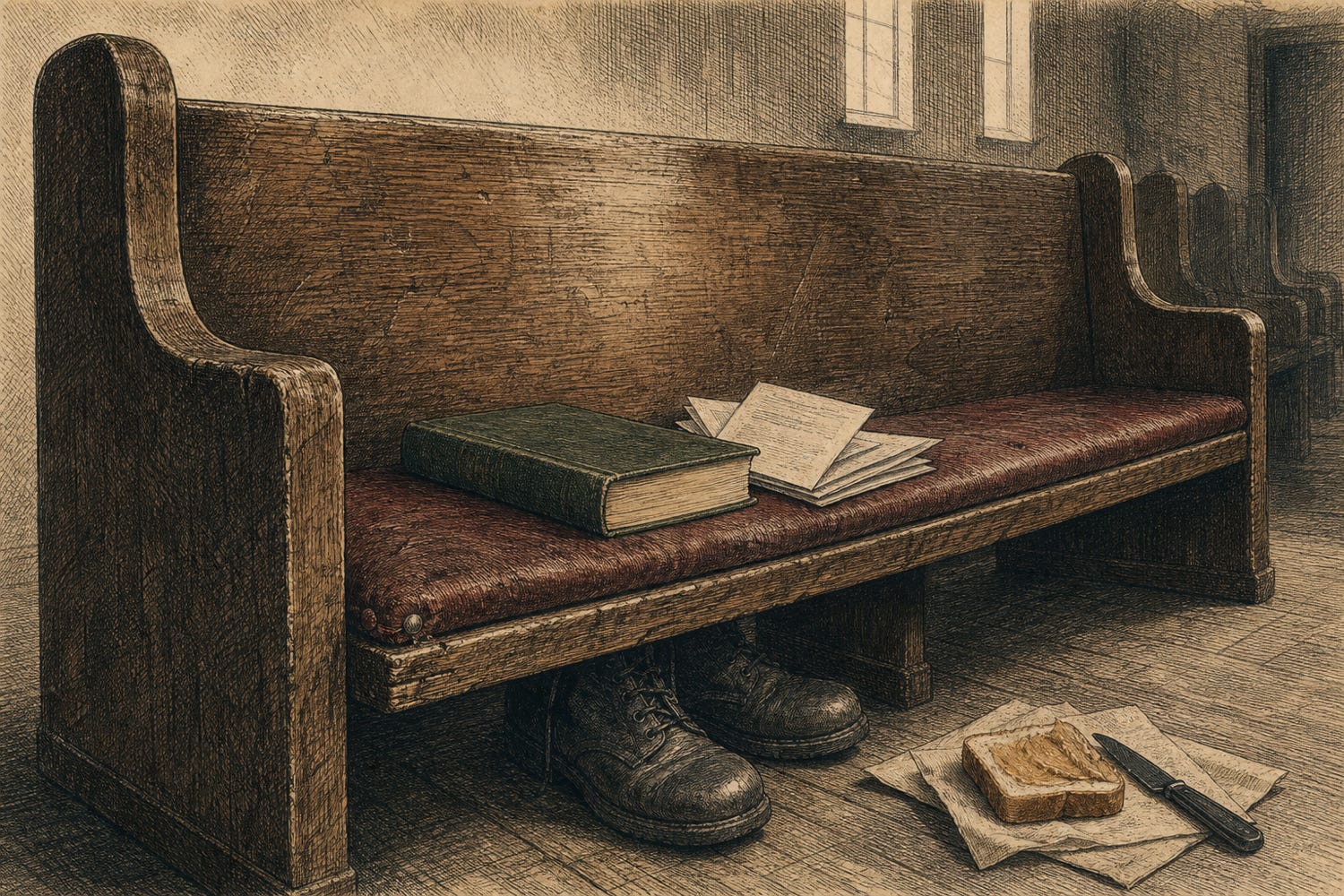
A seventeen-year-old at Fort Benning can find the chapel pew before he finds doctrine.
That distinction matters. The chapel in this Field Note is not a laboratory of pure belief. It is shelter from the system outside it. It is also shelter from a less noble kind of Sunday work. The choice to enter is not clean. It arrives under pressure, fatigue, discipline, and need.
Inside: worn public wood, hymnals, bulletins, boots under the pew. Singing. Crying. Hugging. Peanut-butter bread passed with a plastic MRE knife. The body receives comfort before the mind can endorse the claims attached to it.
That does not make the comfort false. It also does not make the claims true.
The essay resists the old no-atheists-in-foxholes shortcut. Fear is not proof. Need is not metaphysics. But explaining the mechanism does not explain away what happened. The relief was real. The refuge was real. The tenderness was real. The theological declarations remained unavailable. The room could hold the body without settling the truth claims the body wanted to borrow.
That is where the piece keeps its pressure. Requests are easier than claims: help me, hold me, let me endure this. Need has excellent evidence. But the room did not stop at need. It made declarations about authority, sacrifice, rescue, text, eternity, and the invisible structure of the world. Those sentences could not become true merely because the body wanted shelter.
Later, church returned as church rather than refuge from basic training. The claims returned as claims. They did not hold. But respected believers complicated the easy dismissal. Skepticism may be honesty. It may also be the most respectable available name for staying unclaimed.
The pew remains silent in both directions: mercy because it held the body, limit because it could not answer the claims.
Read the full essay on lospino.so: The Pew Does Not Argue Back
Canonical essay scheduled for lospino.so on 2026-07-19. This Substack dispatch is an adapted pointer to the canonical version, not a mirrored copy.