
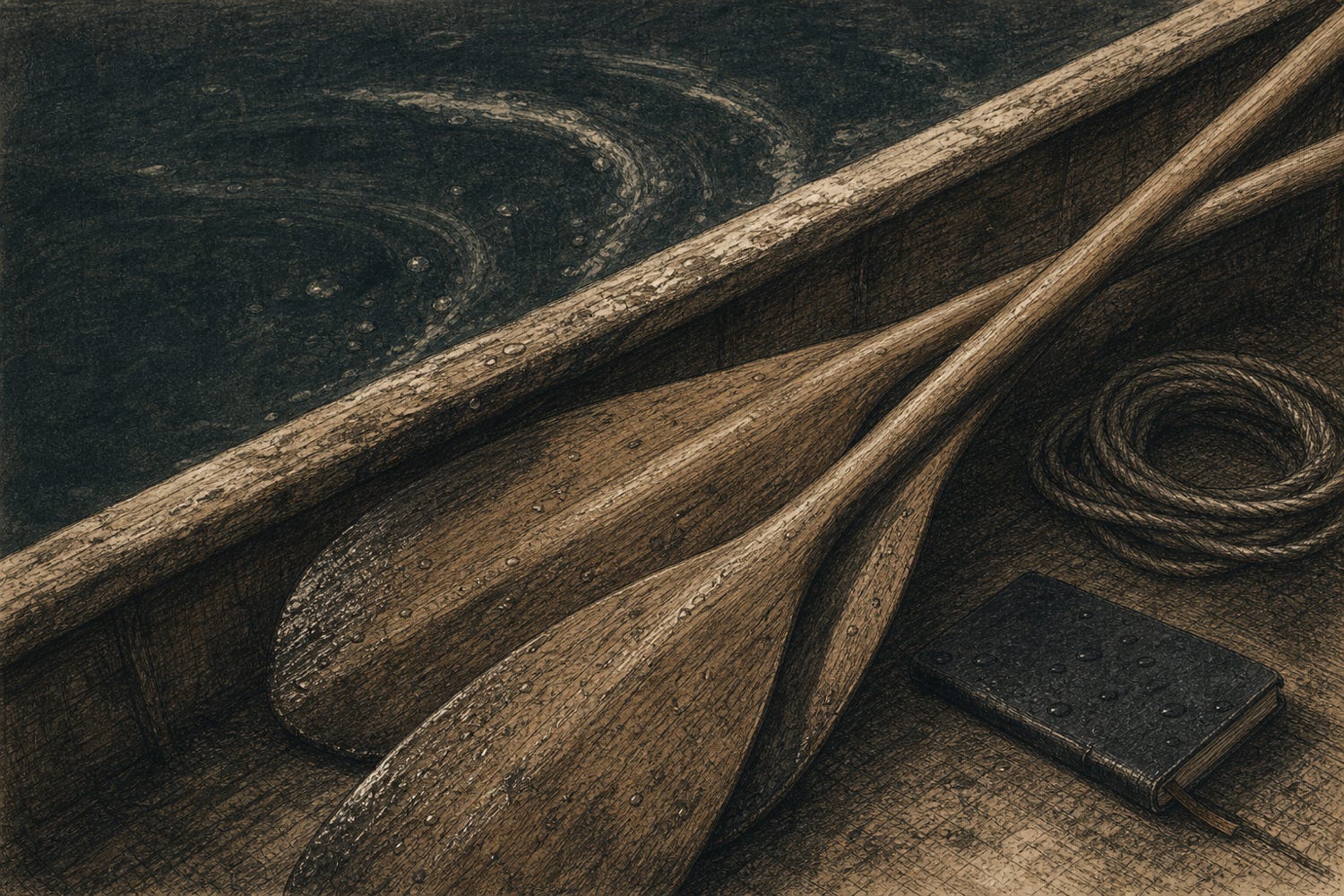
The pressure point is a canoe at race rate.
At 80 or 85 strokes per minute, the body has no shortage of evidence that work is happening. Hands move forward. The blade drops. The shaft loads. The back and foot and lungs all report seriousness. From inside the stroke, resistance can feel like honesty.
The boat may be keeping a different account.
A paddle blade can feel loaded while the canoe receives only part of the work. Some force becomes forward impulse. Some becomes turbulence, foam, roll, yaw, and sound. The muscles know they worked. They do not know where the work went.
That is the distinction this Field Note tries to hold: output is not transmission. Force that feels honest inside the body is not necessarily force the system can use. The boat, crew, and water keep a different ledger than effort does.
The distinction matters most from stroke seat. Seat one sets the visible rhythm for five people he cannot fully watch. That authority is real, but it is incomplete. The job is not to demonstrate the highest rate one paddler can survive. It is to present a rhythm the boat can amplify. At the wrong rate, the canoe can become busy without becoming fast.
The boundary is important. This is not an argument against intensity. Weak force does not move a canoe because it is considerate. A crew still needs pressure, timing, lungs, and the willingness to spend the tank. Modulation cannot mean turning the engine into idle.
The error is letting the feeling of power certify the result.
The same pattern appears outside the boat. A powerful idea can feel important before another person can enter it. A complete explanation can feel generous because it contains the structure the speaker sees. The system beside you may still be trying to locate the blade.
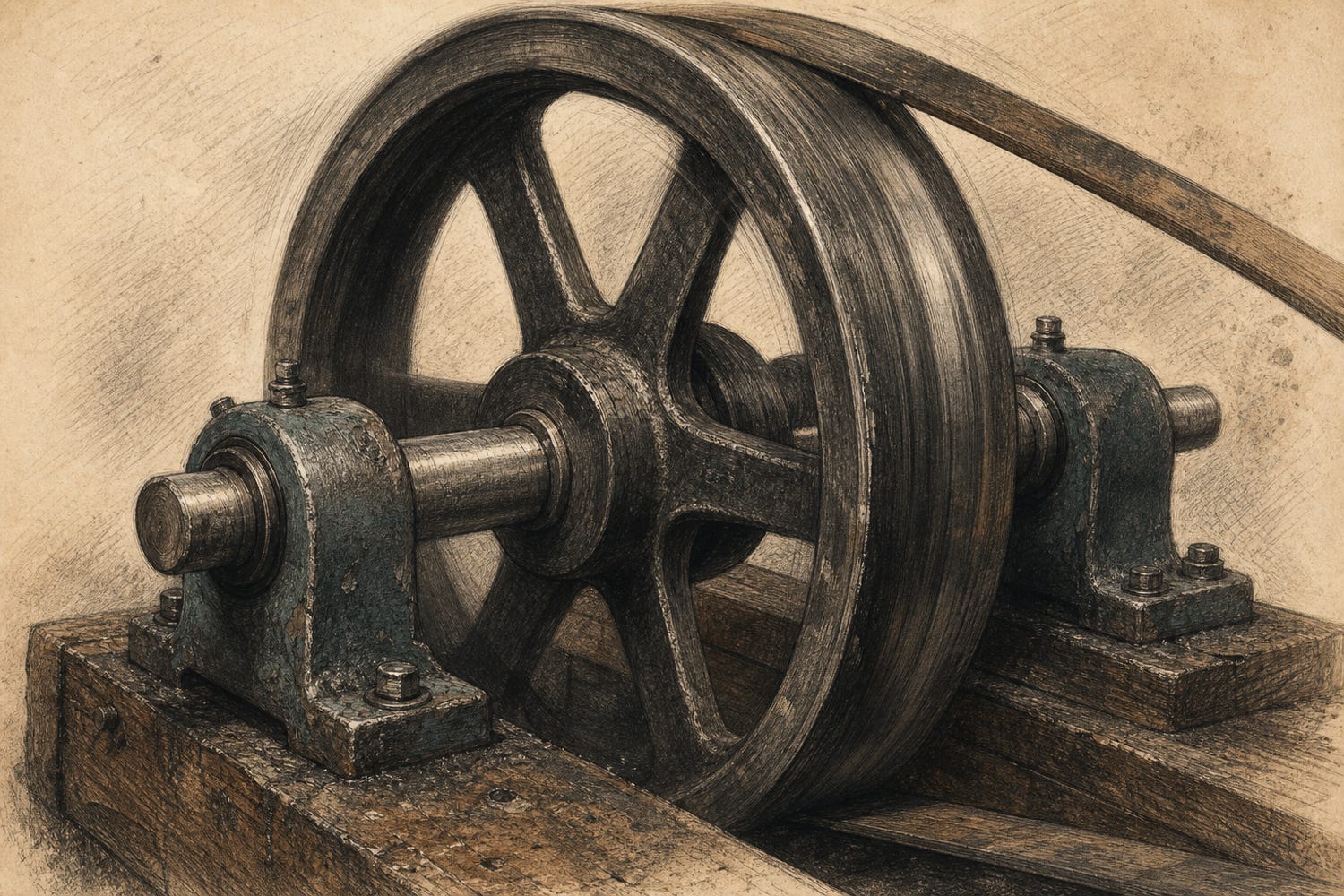
The full essay follows that problem through water, stroke seat, idea transmission, and the limited usefulness of a flywheel: a structure that receives pulses and turns discontinuous force into motion the system can carry.
Read the full essay here: The Water Keeps the Books.